
Who Cares About Sustainability?
While we debate the reasons for the current challenges in the whiskey industry, most agree that innovation will drive future growth. Distinctive charring and toasting combinations, aging in different woods, mashbills with exotic grains, creative finishings, and unique blending concepts are some of the most recognizable forms of innovation in whiskey.
However, there is another level of innovation yet to be explored. The type of innovation that is fundamentally changing medicine, education, finance, law, and transportation – – from the way we conduct medical research, identify and diagnose diseases, and detect fraud to the development of fully autonomous vehicles. Innovation spawned by the fourth industrial revolution, also known as “Industry 4.0,” where smart technology makes manufacturing more efficient, connected, and intelligent.
What if we could use data, machine learning, and advanced dynamic manufacturing to produce the cleanest, highest-quality distillate, operate most efficiently, achieve the theoretical maximum of alcohol production per bushel of grain, prevent the development of specific congeners, while guaranteeing the exact level of others, and deliver precise flavor profiles. What if we could do all of this with a system that is fully automated and dynamically adjusts to achieve desired outcomes with the least impact on the environment?
This is the future of whiskey innovation and it’s happening now at Whiskey House of Kentucky. It’s why we built our state-of-the-art facility and spent more than two-years creating our proprietary digital infrastructure. Our Engineering & Technology team is laser focused on collecting data, properly storing it, putting the right data governance structure in place, curating it, and building the AI-backed learning models that will allow us to push unprecedented research and innovation.
For our customers, it means complete confidence in meeting exacting specifications, full product traceability, access to unapparelled information, tools to make them more efficient, complete inventory security and control, and the ability to tell deeper and richer stories about their brands. For the industry, it will drive research, advancement, and exploration.
So where does this all lead?
Over the next several weeks, I’ll be sharing more about the future of innovation at Whiskey House and how we are transforming contract whiskey market.
But Whiskey House lacks the romance, the mythology of the Master Distiller . . . the open top fermenters so every member of the public can dip their dirty hands into them!
We suppose there are some tradeoffs.
Latest Posts
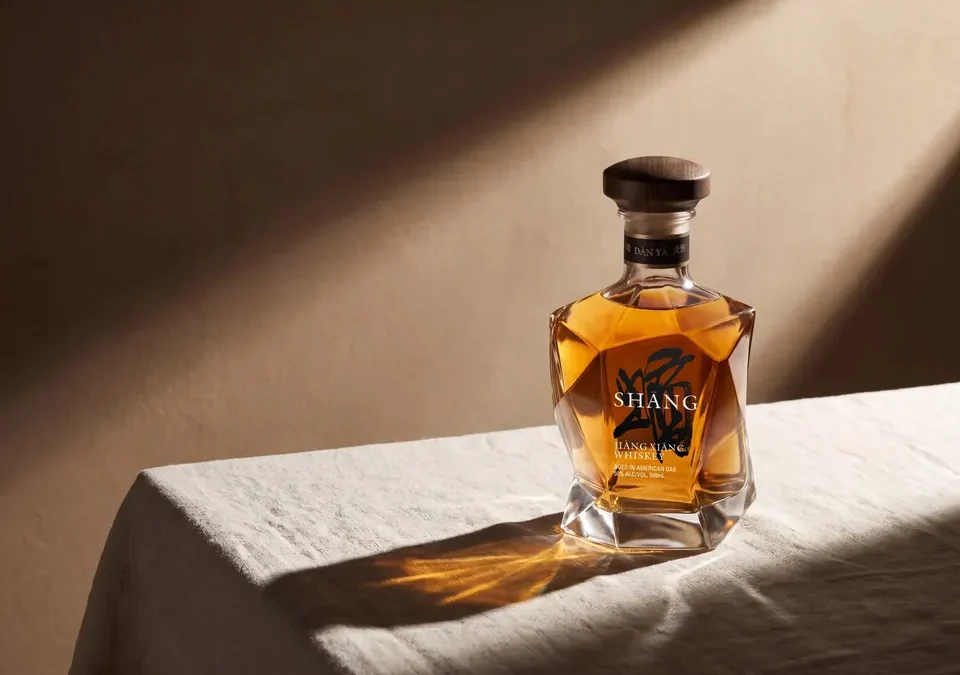
This New Cross-Cultural Whiskey Aims To Blend China And Kentucky

Light Whiskey Production
Last week’s announcement about our new Light Whiskey program generated more interest than we anticipated – both domestically and internationally. If you’re interested in learning more or would like to request a sample, please contact Barry Younkie at...